
Showing posts with label Science. Show all posts
Showing posts with label Science. Show all posts
Friday, May 15, 2009


Sunday, April 12, 2009
Volcanoes: Eruptions and Other Volcanic Hazards

Volcanic eruptions are some of the most spectacular of all natural phenomena, yet they are also among the most dangerous geological hazards. Eruptions may send blocks of rock, ash, and gas tens of thousands of feet into the atmosphere, and individual eruptions have been responsible for killing tens of thousands of people. The hazards associated with volcanic eruptions are not limited to the immediate threat from flowing lava and ash; they may also include long-term atmospheric and climate effects, changes to land use patterns, and the livelihood of human populations."Volcanoes" examines the different types of volcanic eruptions - starting with an introduction to volcanoes, volcanic landforms, and plate tectonics, followed by a detailed description of the various characteristics of magma that lead to differences in eruption style. The classification of igneous rocks, the extreme hazards associated with volcanism, and the prediction of eruptions are some of the many important topics examined in this reference.
Download
Shaun Gallagher - How The Body Shapes The Mind

How the Body Shapes the Mind is an interdisciplinary work that addresses philosophical questions by appealing to evidence found in experimental psychology, neuroscience, studies of pathologies, and developmental psychology. There is a growing consensus across these disciplines that the contribution of embodiment to cognition is inescapable. Because this insight has been developed across a variety of disciplines, however, there is still a need to develop a common vocabulary that is capable of integrating discussions of brain mechanisms in neuroscience, behavioural expressions in psychology, design concerns in artificial intelligence and robotics, and debates about embodied experience in the phenomenology and philosophy of mind. Shaun Gallagher's book aims to contribute to the formulation of that common vocabulary and to develop a conceptual framework that will avoid both the overly reductionistic approaches that explain everything in terms of bottom-up neuronal mechanisms, and inflationistic approaches that explain everything in terms of Cartesian, top-down cognitive states. Gallagher pursues two basic sets of questions.The first set consists of questions about the phenomenal aspects of the structure of experience, and specifically the relatively regular and constant features that we find in the content of our experience. If throughout conscious experience there is a constant reference to one's own body, even if this is a recessive or marginal awareness, then that reference constitutes a structural feature of the phenomenal field of consciousness, part of a framework that is likely to determine or influence all other aspects of experience. The second set of questions concerns aspects of the structure of experience that are more hidden, those that may be more difficult to get at because they happen before we know it. They do not normally enter into the content of experience in an explicit way, and are often inaccessible to reflective consciousness. To what extent, and in what ways, are consciousness and cognitive processes, which include experiences related to perception, memory, imagination, belief, judgement, and so forth, shaped or structured by the fact that they are embodied in this way?
Download

Download
A New Theory Of The Relationship Of Mind And Matter

The relationship of mind and matter is approached in a new way in this article. This approach is based on the causal interpretation of the quantum theory, in which an electron, for example, is regarded as an inseparable union of a particle and afield. This field has, however, some new properties that can be seen to be the main sources of the differences between the quantum theory and the classical (Newtonian) theory. These new properties suggest that the field may be regarded as containing objective and active information, and that the activity of this information is similar in certain key ways to the activity of information in our ordinary subjective experience. The analogy between mind and matter is thus fairly close. This analogy leads to the proposal of the general outlines of a new theory of mind, matter, and their relationship, in which the basic notion is participation rather than interaction. Although the theory, can be developed mathematically in more detail the main emphasis here is to show qualitatively how it provides a way of thinking that does not divide mind from matter, and thus leads to a more coherent understanding of such questions than is possible in the common dualistic and reductionistic approaches. These ideas may be relevant to connectionist theories and might perhaps suggest new directions for their development.
Download
Download
Wednesday, March 18, 2009
The World As I See It - Albert Einstein

To the majority of people Einstein's theory is a complete mystery. Their attitude towards Einstein is like that of Mark Twain towards the writer of a work on mathematics: here was a man who had written an entire book of which Mark could not understand a single sentence. Einstein, therefore, is great in the public eye partly because he has made revolutionary discoveries which cannot be translated into the common tongue. We stand in proper awe of a man whose thoughts move on heights far beyond our range, whose achievements can be measured only by the few who are able to follow his reasoning and challenge his conclusions. There is, however, another side to his personality. It is revealed in the addresses, letters, and occasional writings brought together in this book. These fragments form a mosaic portrait of Einstein the man. Each one is, in a sense, complete in itself; it presents his views on some aspect of progress, education, peace, war, liberty, or other problems of universal interest. Their combined effect is to demonstrate that the Einstein we can all understand is no less great than the Einstein we take on trust.
Download
Download
Sunday, March 15, 2009
46 Science Fair Projects for the Evil Genius

Table of contents
Project 1. Water, Water, Everywhere
Project 2. Who's Home
Project 3. Go With The Flow
Project 4. Kinetic Pendulum
Project 5. Melody Camouflage
Project 6. "Vlip!"
Project 7. Got Salt
Project 8. In The Ear Of The Beholder
Project 9. Flying in the Wind
Project 10. Lighter Struts
Project 11. Stock Up
Project 12. A Better Burger
Project 13. Caught in the Spotlight
Project 14. Sweet Treat
Project 15. C, A Fantastic Vitamin
Project 16. Zenith is Not a Radio
Project 17. Bold Mold
Project 18. M&M's Ring Around World
Project 19. Choices
Project 20. Plants Exhale
Project 21. Melting Mountains
Project 22. Sounds Fishy
Project 23. Parallelogram Prevention
Project 24. A Taste of Plant Acid
Project 25. Split and Dip
Project 26. Johnny Applesauce
Project 27. Backfield in Motion
Project 28. Green No More
Project 29. Not Just Lemonade
Project 30. Less Is More
Project 31. Natural Fences
Project 32. The Nose Knows
Project 33. Germ Jungle
Project 34. Not 'til Christmas
Project 35. Space Farm
Project 36. Cooled Off
Project 37. Pass The Mold
Project 38. Hardwood Cafe
Project 39. Web Crawlers
Project 40. Night Watch
Project 41. Time For The Concert
Project 42. Flying, Walking, Crawling
Project 43. High-Tech Times
Project 44. Commercial TV
Project 45. Sold On Solar
Project 46. Getting to the Root of the Problem
Index
Biographical note
Bob Bonnet and Dan Keen are noted science writers who have written numerous articles and books on a variety of science topics. Bonnet, a retired science teacher, has organized and judged many science fairs at both the local and regional levels, and is a Science Teaching Fellow at Rowan University inNew Jersey. Keen worked in the electronics field for 23 years and is the coauthor of several computer programming books
Download
Project 1. Water, Water, Everywhere
Project 2. Who's Home
Project 3. Go With The Flow
Project 4. Kinetic Pendulum
Project 5. Melody Camouflage
Project 6. "Vlip!"
Project 7. Got Salt
Project 8. In The Ear Of The Beholder
Project 9. Flying in the Wind
Project 10. Lighter Struts
Project 11. Stock Up
Project 12. A Better Burger
Project 13. Caught in the Spotlight
Project 14. Sweet Treat
Project 15. C, A Fantastic Vitamin
Project 16. Zenith is Not a Radio
Project 17. Bold Mold
Project 18. M&M's Ring Around World
Project 19. Choices
Project 20. Plants Exhale
Project 21. Melting Mountains
Project 22. Sounds Fishy
Project 23. Parallelogram Prevention
Project 24. A Taste of Plant Acid
Project 25. Split and Dip
Project 26. Johnny Applesauce
Project 27. Backfield in Motion
Project 28. Green No More
Project 29. Not Just Lemonade
Project 30. Less Is More
Project 31. Natural Fences
Project 32. The Nose Knows
Project 33. Germ Jungle
Project 34. Not 'til Christmas
Project 35. Space Farm
Project 36. Cooled Off
Project 37. Pass The Mold
Project 38. Hardwood Cafe
Project 39. Web Crawlers
Project 40. Night Watch
Project 41. Time For The Concert
Project 42. Flying, Walking, Crawling
Project 43. High-Tech Times
Project 44. Commercial TV
Project 45. Sold On Solar
Project 46. Getting to the Root of the Problem
Index
Biographical note
Bob Bonnet and Dan Keen are noted science writers who have written numerous articles and books on a variety of science topics. Bonnet, a retired science teacher, has organized and judged many science fairs at both the local and regional levels, and is a Science Teaching Fellow at Rowan University inNew Jersey. Keen worked in the electronics field for 23 years and is the coauthor of several computer programming books
Download
Monday, March 9, 2009
The Miracle of Human Creation
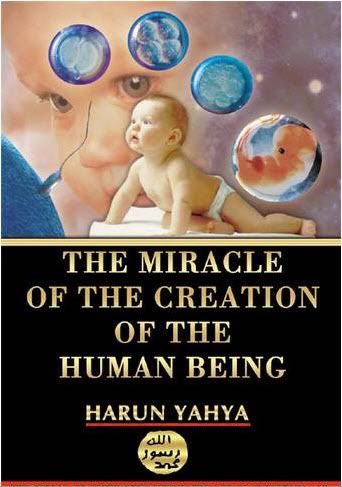
The human body is the most complicated machine in the world. We see with it, hear with it, breathe with it, walk and run with it, and sense pleasure with it. Its bones, muscles, arteries, veins and internal organs are organized with marvellous design, and when we examine this design in detail we find even more amazing facts. Every part of the body, though each may seem to be so different from another, is made up of the same material: cells.
Download
Download
Friday, February 20, 2009
Introduction to Management Science 9th Edition

This widely-adopted introduction to the often mathematically rigorous techniques and applications of management science is designed to make the subject easy to understand, interesting — and accessible — for students with limited mathematical background or skills. Taylor focuses on management science not only as a collection of techniques and processes — but as a philosophy and method for approaching problems in a logical manner — a skill that is applicable across disciplines and endeavors — in all types of jobs in all types of organizations. His perspective is contemporary, his approach is “hands-on,” and his pedagogy is abundant, supportive, and user-friendly — for students and instructors alike. Computer usage is interwoven in every chapter, and tutorials are provided in appendices. Comprehensive in coverage and flexible in organization
Download
Download
Britannica Illustrated Science Library - Mammals

http://online-upload.info/files/bisl11mammal1.rar.html
Britannica Illustrated Science Library - Human Body 01

http://online-upload.info/files/bisl13humanbd21.rar.html
Britannica Illustrated Science Library - Human Body 02

http://online-upload.info/files/bisl13humanbd1.rar.html
Britannica Illustrated Science Library - Energy and Movement

http://online-upload.info/files/bisl14eam1.rar.html
Britannica Illustrated Science Library - Technology

http://online-upload.info/files/bisl15tech1.rar.html
Britannica Illustrated Science Library - Space Exploration

http://online-upload.info/files/bisl06sexp1.rar.html
Britannica Illustrated Science Library - Plants, Algae and Fungi

http://online-upload.info/files/bisl06paf1.rar.html
Britannica Illustrated Science Library - Evolution and Genetics

http://online-upload.info/files/bisl05eag1.rar.html
Britannica Illustrated Science Library - Weather and Climate

http://online-upload.info/files/bisl04weatherandclimate1.rar.html
Britannica Illustrated Science Library - Volcanoes and Earthquakes

http://online-upload.info/files/bisl03vaearth1.rar.html
Britannica Illustrated Science Library - Rocks and Minerals

http://online-upload.info/files/BISL_02_-_Rocks_and_Minerals1.rar.html
Britannica Illustrated Science Library - Universe

http://online-upload.info/files/BISL_01_-_Universe1.rar.html
Subscribe to:
Posts (Atom)
