Showing posts with label Java. Show all posts

Friday, April 3, 2009

Programming Spiders, Bots, and Aggregators in Java

Image

The content and services available on the web continue to be accessed mostly through direct human control. But this is changing. Increasingly, users rely on automated agents that save them time and effort by programmatically retrieving content, performing complex interactions, and aggregating data from diverse sources. Programming Spiders, Bots, and Aggregators in Java teaches you how to build and deploy a wide variety of these agents-from single-purpose bots to exploratory spiders to aggregators that present a unified view of information from multiple user accounts.

You will quickly build on your basic knowledge of Java to quickly master the techniques that are essential to this specialized world of programming, including parsing HTML, interpreting data, working with cookies, reading and writing XML, and managing high-volume workloads. You'll also learn about the ethical issues associated with bot use--and the limitations imposed by some websites.

This book offers two levels of instruction, both of which are focused on the library of routines provided on the companion CD. If your main concern is adding ready-made functionality to an application, you'll achieve your goals quickly thanks to step-by-step instructions and sample programs that illustrate effective implementations. If you're interested in the technologies underlying these routines, you'll find in-depth explanations of how they work and the techniques required for customization.

Download

Thinking in Java (4th Edition)

Image

Thinking in Java has earned raves from programmers worldwide for its extraordinary clarity, careful organization, and small, direct programming examples. It's the definitive introduction to object-oriented programming in the language of the world wide web. From the fundamentals of Java syntax to its most advanced features, Thinking in Java is designed to teach, one simple step at a time. Fully updated for J2SE5 with many new examples and chapters.

Download: Part 1 | Part 2

Saturday, March 28, 2009

Java Game Programming for Dummies

Image

Book Description
Online game design just got easier with Java Game Programming For Dummies, your all-in-one reference guide to writing cool, cutting-edge Internet games. Java Game Programming For Dummies guides new and veteran game designers alike through the nuts and bolts of creating fun, user-friendly games that can be played across the World Wide Web. From your first basic Java applets to sophisticated techniques for advanced 3-D texture-mapping, animation, maze generation, and collision detection, this handy, plain-speaking reference book gives you the tools and tricks you need in order to write professional-quality Java-based games. Plus, the valuable bonus CD-ROM includes the Java Development Kit (a bare-bones developing environment for creating Java programs); various sound utilities for creating, tweaking, and converting sounds to Java-supported formats; all the games, Java code, and applets found in the book (and several more exclusively on CD); and five bonus chapters on the fundamentals of programming with Java.

Download Link:

http://rapiddeposit.info/download/javadummie1.rar.html

Password: Ginseng

Friday, March 6, 2009

better faster lighter java 2004

Image

sometimes the simplest answer is the best. many enterprise java developers, accustomed to dealing with java's spiraling complexity, have fallen into the habit of choosing overly complicated solutions to problems when simpler options are available. building server applications with "heavyweight" java-based architectures, such as weblogic, jboss, and websphere, can be costly and cumbersome. when you've reached the point where you spend more time writing code to support your chosen framework than to solve your actual problems, it's time to think in terms of simplicity.

in better, faster, lighter java authors bruce tate and justin gehtland argue that the old heavyweight architectures are unwieldy, complicated, and contribute to slow and buggy application code. as an alternative means for building better applications, the authors present two "lightweight" open source architectures: hibernate--a persistence framework that does its job with a minimal api and gets out of the way, and spring--a container that's not invasive, heavy or complicated.

hibernate and spring are designed to be fairly simple to learn and use, and place reasonable demands on system resources. better, faster, lighter java shows you how they can help you create enterprise applications that are easier to maintain, write, and debug, and are ultimately much faster.

written for intermediate to advanced java developers, better, faster, lighter java, offers fresh ideas--often unorthodox--to help you rethink the way you work, and techniques and principles you'll use to build simpler applications. you'll learn to spend more time on what's important. when you're finished with this book, you'll find that your java is better, faster, and lighter than ever before.

Download

Saturday, February 28, 2009

Java Web Services: Up and Running

Image

With this example-driven book, you get a quick, practical, and
thorough introduction to Java's API for XML Web Services (JAX-WS)
and the Java API for RESTful Web Services (JAX-RS). Java Web
Services: Up and Running takes a clear, no-nonsense approach to
these technologies by providing you with a mix of architectural
overview, complete working code examples, and short yet precise
instructions for compiling, deploying, and executing a sample
application. You'll not only learn how to write web services from
scratch, but also how to integrate existing services into your Java
applications. All the source code for the examples is available
from the book's companion website. With Java Web Services: Up
and Running, you will:
--Understand the distinction between SOAP-based and REST-style
services
--Focus on the WSDL (Web Service Definition Language) service
contract
--Understand the structure of a SOAP message and the distinction
between SOAP versions 1.1 and 1.2
--Learn various approaches to delivering a Java-based RESTful web
service, and for consuming commercial RESTful services
--Know the security requirements for web services, both SOAP- and
REST-based
--Learn how to implement JAX-WS in various application servers
Ideal for students and experienced programmers alike, Java Web
Services: Up and Running is the concise guide you need to get going
on this technology right away.

http://online-upload.info/files/javawebservice1.rar.html

Sunday, February 22, 2009

Concurrent and Real Time Programming in Java

Image

Concurrent and Real-Time Programming in Java
by Andy Wellings ISBN:047084437X
John Wiley & Sons © 2004 (446 pages)
Beginning with an introduction of the topic, this text describes the concurrency model of Java, summarizing its strengths and weaknesses, as well as details the Real-Time Specification for Java.


Table of Contents
Concurrent and Real-Time Programming in Java
Preface

[list=]
Chapter 1 - Introduction
Chapter 2 - Concurrent Programming in Java
Chapter 3 - Communication and Synchronization
Chapter 4 - Completing the Java Concurrency Model
Chapter 5 - Implementing Communication Paradigms in Java
Chapter 6 - Case Study: Concurrent Maze Search
Chapter 7 - The Real-time Specification for Java
Chapter 8 - Memory Management
Chapter 9 - Clocks and Time
Chapter 10 - Scheduling and Schedulable Objects
Chapter 11 - Asynchronous Events and Their Handlers
Chapter 12 - Real-Time Threads
Chapter 13 - Asynchronous Transfer of Control
Chapter 14 - Resource Sharing
Chapter 15 - Physical and Raw Memory
Chapter 16 - Case Study—Automobile Cruise Control System
Chapter 17 - High-Integrity Real-Time Systems
Chapter 18 - Conclusions
Appendix - Java Class and Interface Specifications
[/list]

Download

Java All In One Desk Reference For Dummies


* Eight minibooks comprising nearly 900 pages give developers the tips and techniques they need to get up and running on the new J2SE 6 (Java Standard Edition 6) and JDK 6 (Java Development Kit 6)
* This friendly, all-inclusive reference delivers the lowdown on Java language and syntax fundamentals as well as Java server-side programming, with explanations, reference information, and how-to instructions for both beginning and intermediate-to-advanced programmers
* Minibooks cover Java basics; programming basics; strings, arrays, and collections; programming techniques; Swing; Web programming; files and databases; and fun and games

Download

Password: a3990918

Saturday, February 21, 2009

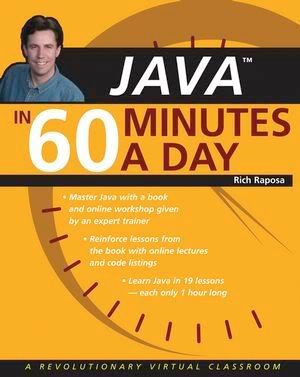
Java in 60 Minutes a Day

Image

* Shows readers how to use Java to harness the power of object-oriented programming
* Includes thirty one-hour lessons that recreate a typical week-long introductory seminar
* Focuses on the Java 2 Platform, Enterprise Edition (J2EE)
* Helps readers to develop skills that are critical to many Web services scenarios
* The author was one of the first Sun Certified Instructors and has since taught Java to thousands of developers
* Companion Web site features an online presentation by the author that follows along with each chapter and includes an audio-only option for readers with dial-up Internet connection

Download

Wednesday, February 11, 2009

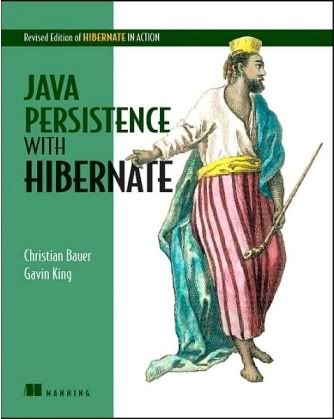
Java Persistence with Hibernate

Image

Persistence-the ability of data to outlive an instance of a program-is central to modern applications. Hibernate, the most popular Java persistence tool, provides automatic and transparent object/relational mapping making it a snap to work with SQL databases in Java applications. Hibernate applications are cheaper, more portable, and more resilient to change. Because it conforms to the new EJB 3.0 and Java Persistence 1.0 standard, Hibernate allows the developer to seamlessly create efficient, scalable Java EE applications.

http://online-upload.info/files/MJPwH1.rar.html


Big Java - Third Edition (2008)

Image

No one brews up a better Java guide than Cay Horstmann and in this Third Edition of Big Java he's perfected his recipe. Thoroughly updated to include Java 6, the Third Edition of Horstmann's bestselling text helps you absorb computing concepts and programming principles, develop strong problem-solving skills, and become a better programmer, all while exploring the elements of Java that are needed to write real-life programs.

A top-notch introductory text for beginners, Big Java, Third Edition is also a thorough reference for students and professionals alike to Java technologies, Internet programming, database access, and many other areas of computer science.

Features of the Third Edition:
* The 'Objects Gradual' approach leads you into object-oriented thinking step-by-step, from using classes, implementing simple methods, all the way to designing your own object-oriented programs.
* A strong emphasis on test-driven development encourages you to consider outcomes as you write programming code so you design better, more usable programs
* Helpful "Testing Track" introduces techniques and tools step by step, ensuring that you master one before moving on to the next
* New teaching and learning tools in WileyPLUS--including a unique assignment checker that enables you to test your programming problems online before you submit them for a grade
* Graphics topics are developed gradually throughout the text, conveniently highlighted in separate color-coded sections
* Updated coverage is fully compatible with Java 5 and includes a discussion of the latest Java 6 features

http://online-upload.info/files/bj1.rar.html


Friday, February 6, 2009

Java All In One Desk Reference For Dummies


* Eight minibooks comprising nearly 900 pages give developers the tips and techniques they need to get up and running on the new J2SE 6 (Java Standard Edition 6) and JDK 6 (Java Development Kit 6)
* This friendly, all-inclusive reference delivers the lowdown on Java language and syntax fundamentals as well as Java server-side programming, with explanations, reference information, and how-to instructions for both beginning and intermediate-to-advanced programmers
* Minibooks cover Java basics; programming basics; strings, arrays, and collections; programming techniques; Swing; Web programming; files and databases; and fun and games

http://rapiddeposit.info/download/javaref1.rar.html

Password: a3990918

Wednesday, January 21, 2009

Java Game Programming for Dummies

Image

Book Description
Online game design just got easier with Java Game Programming For Dummies, your all-in-one reference guide to writing cool, cutting-edge Internet games. Java Game Programming For Dummies guides new and veteran game designers alike through the nuts and bolts of creating fun, user-friendly games that can be played across the World Wide Web. From your first basic Java applets to sophisticated techniques for advanced 3-D texture-mapping, animation, maze generation, and collision detection, this handy, plain-speaking reference book gives you the tools and tricks you need in order to write professional-quality Java-based games. Plus, the valuable bonus CD-ROM includes the Java Development Kit (a bare-bones developing environment for creating Java programs); various sound utilities for creating, tweaking, and converting sounds to Java-supported formats; all the games, Java code, and applets found in the book (and several more exclusively on CD); and five bonus chapters on the fundamentals of programming with Java.

http://online-upload.info/files/javagame1.rar.html

Password: Ginseng

Friday, January 9, 2009

Java Programming for Engineers

Image

While teaching Java programming at Minnesota State University, the authors noticed that engineering students were enrolling in Java programming courses in order to obtain basic programming skills, but there were no Java books suitable for courses intended for engineers. They realized the need for a comprehensive Java programming tutorial that offers basic programming skills that can be applied in the field of engineering. With this in mind, the authors developed Java Programming for Engineers in order to meet the needs of both engineers and engineering students. The text uses the personal computer as a development platform and assumes no prior programming experience or knowledge. The only skills expected of the reader are basic keyboarding and user-level familiarity with the PC. Topics covered range from mathematical expressions to linear systems to engineering graphics. Chapters on problem solving skills and the designing of engineering applications walk readers through real word problems they might encounter. Divided into two parts, Part 1 is a description of the Java language, of the fundamentals of object orientation, input and output operations, and error handling. Part 2 is about Java programming for engineers. It starts with computer number systems, fixed- and variable-precision numeric data, mathematical programming in Java as could be of interest to engineers, and concludes with an overview of Java Graphics.

http://online-upload.info/files/javaprogrammingforeng1.rar.html


VTC - Java 2: Certified Programmer Tutorials

http://www.itks-training.com:8888/JAVA/VTC%20The%20Java%202%20Certified%20Programmer%20Tutorial/51NFJS34Y6L__AA280_.jpg

Introduction
Course Introduction (04:06)
The Exam Pt.1 (03:58 )
The Exam Pt.2 (03:37)

Object Oriented Programming
An Object (01:56)
A Class (01:50)
Inheritance (02:00)
Instantiation (01:26)
An Abstract Class (02:15)
An Interface (03:09)
Polymorphism (02:44)

Declarations & Operations
Hello World (05:14)
Names (02:19)
Data Types (06:34)
Data Types Pt.2 (03:16)
Data Declaration (05:05)
Literal Values (04:48 )
Literal Values Pt.2 (03:38 )
Arithmetic Operators (04:43)
Bitwise Operators (03:24)
Assignment Operators (02:28 )
Widening and Narrowing (03:09)
Boolean Operations (05:14)

References & Objects
Instantiation & References (02:58 )
Polymorphism (04:19)
Garbage Collection (05:34)
Arrays (04:16)
Multidimensional Arrays (02:00)
Array Initial Values (04:34)

The Structure of Java
The Java Virtual Machine (02:52)
Contents of a Class (05:09)
Class Modifiers (04:58 )
Data Modifiers (04:34)
Method Modifiers (04:01)
Constructors (06:21)
Methods Pt.1 (04:51)
Methods Pt.2 (02:42)
Methods Pt.3 (02:07)
Methods Pt.4 (06:49)

Flow Control
Boolean Expressions (03:18 )
If/Else (02:46)
While & Do/While (02:19)
For Pt.1 (03:40)
For Pt.2 (03:26)
Switch/Case (05:43)
Break & Continue (04:07)
Throwing an Exception Pt.1 (06:46)
Throwing an Exception Pt.2 (06:41)
The Try/Catch/Finally Block (04:55)
Overloading & Overriding Methods (03:36)
Some Specific Exceptions (07:01)
Assert (03:51)

Language Fundamentals
Packages (02:36)
Import (03:03)
Classpath & Jar Files (02:54)
Abstract Class (03:57)
Interfaces (04:03)
Java Keywords (02:41)
Nested Classes (03:40)
An Anonymous Class (04:00)
Enumerated Types (04:39)
Comparing Objects (02:30)
Java Bean Naming Standards (04:17)

java.io & java.text
File Input & Output (06:41)
Stream Input & Output (06:23)
Serializable Classes (06:07)
Format & Parse Dates (04:28 )
Number & Wrapper Classes (04:48 )
NumberFormat (02:43)

Threads
java.lang.Thread (04:12)
java.lang.Runnable (05:03)
Synchronized (04:29)
Wait & Notify (05:03)
More About Threads (02:03)

java.lang & java.util
java.lang.Math (03:48 )
Strings (05:13)
Boxing & Unboxing (04:14)
java.lang.System (03:58 )
The Set Collection (04:09)
List, Queue, & Map (06:40)
Generic Syntax (06:28 )
Selecting a Collection Class (05:03)
Hashcode (03:11)
java.util.regex (03:15)
Pattern & Matcher (04:42)
java.lang.Comparable (03:47)
Sorting & Searching (05:21)

Wrapup
Some Terms (03:58 )
Summary of the Course (02:51)

http://online-upload.info/files/vtcj2certd.part1.rar.html
http://online-upload.info/files/vtcj2certd.part2.rar.html


Wednesday, January 7, 2009

Java Thread Programming

http://images.amazon.com/images/P/0672315858.01._SCLZZZZZZZ_.jpg

Professional Java developers who've come as far as they can without exploiting threads will find their skills bumped up a few notches by the time they finish Paul Hyde's Java Thread Programming. In a five-and-a-half-page first chapter, the book gives a basic concept briefing, then gets down to business with an example-rich education from the starting thread through inter-thread communication, thread groups, thread pooling, threads and Swing, and more. You'll get an experienced voice on how to gracefully exit from a thread -- and find out when to use the lead-between-the-eyes SureStop class instead. You'll even find out when multiple threads aren't a good idea. If you're serious about learning what it takes to do Java really, really well, this book is a good place to invest your time.

Get This Book

Enterprise JavaBeans 3.0, 5th Edition

Image

Richard Monson-Haefel, Bill Burke
O'Reilly Media, Paperback, 5th edition, Published May 2006, 760 pages, ISBN 059600978X

Get This Book

Saturday, January 3, 2009

Java Programming for the Absolute Beginner

Image

Java is an object-oriented language that is extremely popular with programmers and Web developers.

This beginner-level book teaches readers the fundamental programming concepts they need to grasp in order to learn any computer language. The unique approach covers the versatility and extensibility of Java using game creation as a teaching tool. The author starts with the basics of Java, assuming that the reader is truly a beginner with no programming experience. This non-intimidating guide to Java will be a welcome addition to the library of any aspiring programmer.

About the Author:
Joseph P. Russell is a development programmer for Meditech, a major medical information systems software and service company, developing software for their client/server financial products. He is also a contributing writer to the Web site EastCoastGames.com. He is a graduate of Rhode Island College where he majored in computer science.

Get This Book

Wednesday, November 26, 2008

Computer Graphics Using Java 2D and 3D


Computer Graphics Using Java 2D and 3DThis Java handbook makes a practical tutorial on Java 2D and Java 3D for computer professionals. It contains in-depth coverage of basic computer graphics concepts and techniques, and introduces advanced graphic features to an audience mostly trained in the Java language. Chapter topics include mathematical background for computer graphics, .geometric transformation, views, lighting and texturing, behavior and interaction, and animation. For computer programmers and engineers, data analysts, graphic designers/animators, and game developers.

Download This Book

Saturday, November 22, 2008

Database Programming With JDBC And Java, 2nd_Edition


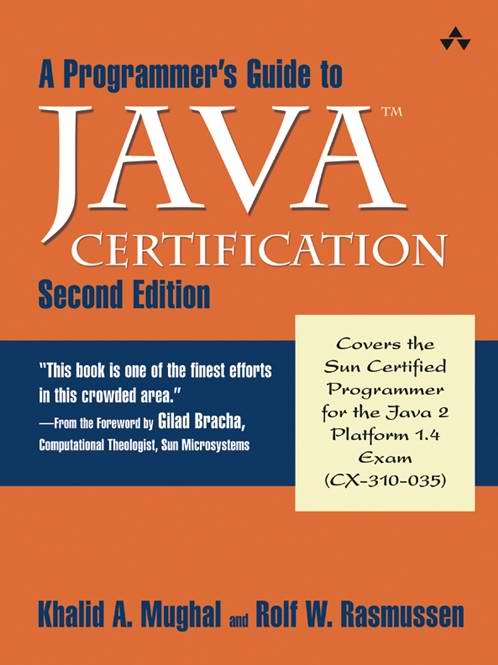
A Programmers Guide To Java Certification (2nd Edition)

To pass the Sun Certified Programmer for *Numerous exam-relevant review questions to test your understanding of each major topic, with annotated answers
*Programming exercises and solutions at the end of each chapter
*Copious code examples illustrating concepts where the code has been compiled and thoroughly tested on multiple platforms
*Program output demonstrating expected results from running the examples
*Extensive use of UML (Unified Modeling Language) for illustration purposes
*An introduction to basic terminology and concepts in object-oriented programming
*Advice on how to avoid common pitfalls in mastering the language and taking the exam
*Platform-independent coverage--platform-specific details are provided where relevant
*Information about the SCPJ2 Upgrade exam

Download This Book