Showing posts with label Linux. Show all posts

Sunday, April 26, 2009

A Practical Guide to Linux(R) Commands, Editors, and Shell

Image

The Most Useful Linux Tutorial and Reference Ever, with Hundreds of High-Quality Examples Covering Every Linux Distribution!

To be truly productive with Linux, you need to thoroughly master the shells and the command line. Until now, you had to buy two books to gain that mastery: a tutorial on fundamental Linux concepts and techniques, plus a separate reference. Worse, most Linux references offer little more than prettied-up man pages. Now, there’s a far better solution. Renowned Linux expert Mark Sobell has brought together comprehensive, insightful guidance on the tools system administrators, developers, and power users need most, and an outstanding day-to-day reference, both in the same book.

Read More

Thursday, April 16, 2009

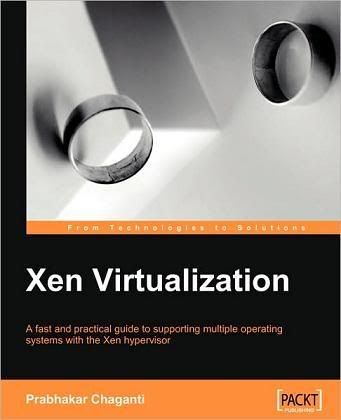
Xen Virtualization: A Practical Handbook

Image

Book description
This concise handbook targeted at Linux administrators and virtualization enthusiasts is ideal for professionals wanting an easy-to-navigate reference when working with Xen and virtualization. It offers bite-sized practical walkthroughs and experiential solutions for many common virtualization tasks using Xen. Using Fedora Core as host operating system, it shows how to add Xen support and create guest domains running different operating systems, then dissects a range of common virtualization tasks. Originally developed in 2003 at the University of Cambridge Computer Laboratory, Xen is an open-source paravirtualization technology allowing multiple operating systems to run on one physical hardware resource with near native performance. Xen supports several operating systems-Linux, FreeBSD, Windows, and NetBSD. There are now commercial versions of Xen that build on of the open-source version with additional enterprise features; this book explores and uses the open-source version of Xen.

Download

Thursday, March 26, 2009

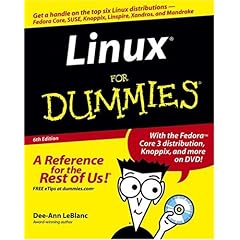
Linux For Dummies 6th Ed

Image

DESCRIPTION
Previous editions of Linux For Dummies have garnered rave reviews. However, there’s one scary term applied to them—outdated! The 6th Edition remedies that with easy-to-understand information on the latest version of the most popular Linux distributions, including Fedora Core, SuSE, Mandrake, Xandros, Linspire, and Knoppix. This guide walks you though installing, configuring, tuning, and using each version of Linux, the low-cost, secure alternative to expensive operating systems.

Download

Friday, January 16, 2009

RHCE Red Hat Certified Engineer Linux Study Guide 4Edition

http://ecx.images-amazon.com/images/I/51GYQCILCpL._SL500_AA242_PIkin-dp-500,BottomRight,-11,38_AA280_SH20_OU01_.jpg

Get the book that shows you not only what to study, but how to study. The only classroom-based integrated study system for professional certification gives you complete coverage of all objectives for the Red Hat Certified Linux Engineer exam, hundreds of review questions, and hands-on lab exercises. The CD-ROM features two complete pencil and paper RHCE practice exams (available to Linux users), an electronic book, and a bonus Red Hat installation screen review.

http://online-upload.info/files/EngineerLinux1.rar.html


Saturday, January 3, 2009

24 Hour Linux shell programming course

http://www.lookpdf.com/images/thumbnail/220-linux-shell-scripting-tutorial.gif

In recent years, the UNIX operating system has seen a huge boost in its popularity, especially with the
emergence of Linux. For programmers and users of UNIX, this comes as no surprise: UNIX was designed to
provide an environment that's powerful yet easy to use.
One of the main strengths of UNIX is that it comes with a large collection of standard programs. These
programs perform a wide variety of tasks from listing your files to reading email. Unlike other operating
systems, one of the key features of UNIX is that these programs can be combined to perform complicated
tasks and solve your problems.
One of the most powerful standard programs available in UNIX is the shell. The shell is a program that
provides you with a consistent and easy-to-use environment for executing programs in UNIX. If you have
ever used a UNIX system, you have interacted with the shell.

Get This Book

Wednesday, December 17, 2008

Ubuntu Linux For Dummies

Image

What has made Ubuntu the most popular Linux distribution in recent years? It's the emphasis on ease of installation and use. It gets even easier when paired with Ubuntu Linux For Dummies. This friendly reference shows you how to run Ubuntu directly from CD-ROM and install it on a PC as a personal workstation and network server. You’ll find out how to download Ubuntu and start using it right away. You'll also discover how to:

* Connect to a LAN via a wireless and Ethernet
* Use OpenOffice.org and Mozilla Firefox drawing and editing
* Tap into multimedia, graphics and other applications using Ubuntu
* Create services for a home or small business network
* Generate and manage web pages, print services, and more
* Find helpful information about Ubuntu and Linux
* Troubleshoot and fix problems

"Ubuntu" means "humanity toward others." Operating system guidebooks don’t get any more humane than Ubuntu Linux For Dummies.

From the Back Cover

Get acquainted with Ubuntu and

taste the freedom

Set up a workstation, connect to a wireless network, get online, and more

Ubuntu is about community — in this case, the Linux community, which is pretty friendly. So is this book, and it will have you up and running with Ubuntu in no time. You'll not only discover how to use the live version, but also how to install it permanently, use Ubuntu for daily work, and even play with multimedia.

* Try Ubuntu without permanently installing it
*

Connect to a network via dialup or broadband
*

Explore the GNOME® graphical desktop environment
*

Set up calendars and e-mail clients

Download This Book

Wednesday, December 3, 2008

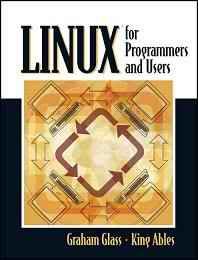
Linux For Programmers And Users

Image

This book is an outgrowth of the popularity of Linux. Its original version, UNIX for Programmers and Users, written by Graham and updated in subsequent editions by King has been widely used in classroom settings and is popular with professionals new to UNIX or UNIX programming. The increasing popularity of Linux created a demand for a Linux version of such a book, especially in classrooms where Linux is emerging as the platform of choice for computer science students.

Graham wrote the original version in response to the need for course material for university students as well as professional programmers, taking great care to include many different types of users in his target audience. He created a book that was helpful to everyone from a complete beginner to an experienced programmer and allowed instructors to teach a variety of courses. The widespread use of Linux has led to the same need for Linux users and instructors.

When my editors at Prentice-Hall first approached me about creating a Linux version of the book, my flippant response was "Fine, change 'UNIX' to 'Linux' on the cover and ship it!" That response was made in jest, of course, but I also thought it was rooted in some amount of truth. I had used many versions of both UNIX and Linux in the past several years, and they seemed all the same to me (which is a strength of both Linux and UNIX). But this similarity is only skin deep.

While, on the surface, Linux looks just like UNIX (which is the whole idea behind having a standard), the implementation is another story. With the benefit of thousands of volunteer programers unencumbered by marketing departments and product release schedules (i.e., "business issues") but armed with years of advances in operating-systems understanding, Linux is actually a significant improvement of an already good idea. When you look "under the hood," you will find that Linux is a much cleaner implementation because it doesn't suffer from the long evolution and tangled code base that plagues many versions of UNIX today.

And so this Linux-specific book is actually very different from its UNIX counterpart. Even where the substance is similar to UNIX, the details and examples may vary greatly. Substantive differences include a new chapter on installing Linux and largely revised chapters on the internal workings of Linux and system administration.

While we could not possibly cover every detail of every command or application that comes with Linux (without creating a multivolume set!), we try to cover the basics and the most often used utilities to provide a solid foundation upon which you can continue to build your understanding of Linux and the GNU utilities.


TABLE OF CONTENT:
Chapter 01 - What Is Linux?
Chapter 02 - Installing Your Linux System
Chapter 03 - GNU Utilities for Nonprogrammers
Chapter 04 - GNU Utilities for Power Users
Chapter 05 - The Linux Shells
Chapter 06 - The Bourne Again Shell
Chapter 07 - The Korn Shell
Chapter 08 - The C Shell
Chapter 09 - Networking and the Internet
Chapter 10 - The Linux Desktop
Chapter 11 - C Programming Tools
Chapter 12 - Systems Programming
Chapter 13 - Linux Internals
Chapter 14 - System Administration

Download This Book

password: ganelon

Tuesday, November 25, 2008

Debian GNU/Linux Bible

Book Description
Debian GNU/Linux is one of the major Linux distributions available today. It is known as the most open" of the Linux distributions -- for its commitment to the free software principals, and its community-centricism. It is also known for its tradition of high-quality packages and package management tools, as well as its focus on security issues. Debian GNU/Linux® Bible focuses on common apps, GUIs, networking, and system administration.

The Debian Project's Internet-based development model has helped the distribution achieve unparalleled Internet functionality.
Book Info
Comprehensive reference for using Debian GNU/Linux, offering all of the information needed to make optimum use of this 'potato' release. Features numerous tables, screen shots, and other helpful visuals.

Download This Book

Friday, November 21, 2008

The Definitive Guide to Linux Network Programming


This book isone nice and convenient package that I will keep on the shelf as a reference manual.

— Derek Anderson, JavaRanch GreenHorn

The Definitive Guide to Linux Network Programming offers a clear, concise treatment of creating clients and servers under the Linux operating system. This book assumes that you know C and have experience developing code on Linux, but it provides everything else you'll need as a programmer for real-world network programming.

Whether you're a Windows developer looking to expand to Linux, or you're a proficient Linux developer looking to incorporate client-server programming into your applications, this book has a wealth of invaluable information to suit your needs.

This book covers design, implementation, debugging, and security. You'll also learn about the many kinds of socket types, sessioned versus sessionless protocols, and encryption, as well as how to build a custom protocol, how to use SSL, and how to tunnel data.

Download This Book